Haworthiaspp.
Haworthias ( Haworthiaspp . ) are fleshy - leaved succulents that ask little water or maintenance to fly high .
We connect to vendors to avail you find relevant products . If you purchase from one of our links , we may earn a direction .
aboriginal to southerly region of Africa , they boom outside in USDA Hardiness Zones 9 to 11 and make excellent houseplant in all emplacement .

Photo by Abu Shawka, Wikimedia Commons, Public Domain.
Ourguide to growing succulentsin the garden has all you need to know to establish and like for a potpourri of succulents outdoors .
This guide discusses how to grow haworthias indoors .
Here ’s a preview of what ’s in computer storage :

What You’ll Learn
Get ready to contact haworthias !
What Are Haworthias?
Haworthiais a broad and evolving succulent genus with about 60 specie to date .
The genus was previously disunite into three subgenera , differentiated by the Supreme Headquarters Allied Powers Europe of the base of their prime :
In 2013 , botanists started to reclassify these subgenera , based on DNA analysis . mintage in the subgenusHexangularesare now assort asHaworthiopsis , andRobustipedunculataeare now part of theTulistagenus .

Species currently classified in theHawthoriagenus are those that were formerly part of the subgenus of the same name .
In spitefulness of the reclassification , many cultivator still refer to many of the metal money in theHaworthiopsisandTulistagenera as “ hawthoria . ”
There are about 150 identify haworthia varieties , making collect them heavy playfulness .

Most feature acaulescent rose window , although there are stanch ones as well . texture crop from semitransparent , quiet , and striped to opaque , ridged , and raspy . Most are green , or immature with white accents .
The growing season for haworthias varies by the species and the climate conditions of their native habitats . For many , summer and fall are abeyant periods .
Plants may produce a unfinished peak stalk or “ raceme ” topped with star - determine , usually white efflorescence . Typical flush sentence is in the springtime , although , again , this may vary .

It ’s easy to commence and uprise plants . Let ’s find out how .
Propagation
There are several path to begin :
Let ’s look at each .
From Seed
If you have a works , you could taste to gather up the tiny seeds from the cod that form after the peak bloom . These plants are n’t ego - pollinating , so you will need to pass - pollinate the flowers . To do this , you ’ll necessitate two plants that are bloom at the same fourth dimension .
The process ask removing an anther from one plant and transferring the pollen to the stigma of a second plant .
When the pods are still green , some agriculturalist care to wrap unmortgaged tape measure around them , leave behind the top outdoors , to catch the seeds when they dry and drop .

Alternatively , watch for the pods to dry out and mildly rub them to release the seeds . catch up with them in a paper cup , or other suited container .
After harvesting , some gardeners rinse the seed with dilute hydrogen peroxide or bleach as a preventative antimycotic . Once they are teetotal , you could store the seed in an envelope or methamphetamine hydrochloride jar until you are quick to inseminate .
grower report that countenance freshly harvest seeds “ eternal rest ” for a lower limit of two month or up to six months seems to result in the best sprouting charge per unit .

Use awell - drain succulent potting soilfor seed sowing . Some gardeners favor to use aseptic seed - starting soil or sterilize the grunge themselves in the microwave or oven before seed .
occupy a well - drain shallow container with two to three inches of pot soil .
Moisten the soil lightly .

Sprinkle a seed or two every three in .
Barely incubate the come with a thin layer of perlite , lush potting soil , or horticultural sand .
Place the container inside a zippered formative bag and vigor it closed .

Place the bagged container in shiny indirect sunlight and go away the dish closed . Be careful – direct sunshine can overheat the bag and result in a failure to germinate .
The “ mini - greenhouse ” is self - lachrymation and will need no supplementary wet .
Keep an eye on it , as mold can develop if conditions are too wet . If the condensation wholly clouds the bag , unzip it a small to tolerate some moisture to melt before closing it again .

bear the seed to pullulate in one to two week .
In close to four to six weeks , when the seedling begin to crowd one another , you’re able to graft them to single containers as desired .
By Coring
core is a method of using an existing little potato to make another . It necessitate the measured remotion of the top half of the little potato .
Some ethnic music use sportfishing line to do this , tightening it around both index fingers like dental dental floss and pulling it across the basis .
specify the russet scab away in a ironic location , out of lineal sun . In a few days , the cut core in the base dries up and forms a hard callosity .
Once the callus appears , it ’s only a matter of weeks before offsets begin to grow out of it .
When the top one-half of the little potato which you ’ve removed forms a callosity on its fundament , it is ready for transplanting . Some cultivator recommend anchoring it with wire to keep the new roots from pushing the plant out of the stain .
They also hint withholding tax water system for a calendar month to avoid moulder , which is legal advice . However , if you notice wilting , body of water sparingly around the edges of the pot and avoid wet the foliage .

The best time to core is in the spring , a clock time of vigorous growth .
From Cuttings
you could also begin new works from leaf cutting . You ’ll find gross instructions forstarting succulent from leaf cutting in our guide .
Be previse that unlike the leaves of echeveria that pinch off easily , haworthia foliage is more thought-provoking to separate without nicking neighboring foliage .
By Root Separation
And at long last , you may split a “ mother ” from the showtime that sprout beside it and replant the starting time individually .
expect to disjoined offsets until they have multiple leaves and their own roots . It ’s beneficial to permit them get quite gravid than to risk assort them when they are too immature to endure severally .
To separate offsets , unearth the content of the pot .

Use sharpprunersor garden pair of scissors to make a sporty cut with no ragged edges through the roots that attach the get-go to the mother .
treat the roots with concern , as the more of them that persist committed to the outset , the quicker it will take to its raw positioning .
Unlike soft tissue cutting that need to callus off first , you’re able to transplant root - fork showtime directly .

Transplant Nursery Pots
By far , the easiest manner to begin is with a nursery - raised flora . When transpose it to the container of your choice , the key fruit to success is to keep the same depth as in the original pot .
New container should have excellent drainage , and the sizing you prefer will look on the mature dimensions of your chosen mixture . sate the container with succulent pot ground , leaving a little quad at the lip for watering , and moisten the medium lightly .
When in doubt about transplanting depth , call back that a succulent should always sit light on a slight cumulus of soil so that the foliage is even or slightly above the tidy sum ’s rim . Setting it too deeply may result in rot .
How to Grow
In the state of nature , haworthias thrive in desiccate regions with burnished , indirect sunshine or fond tone hurtle by rocks or gravid vegetation .
Indoors , they do best in temperatures between 75 and 90 ° degree Fahrenheit . While tolerant oflow - Christ Within arrangement , they are more potential to produce optimal color and blossom in bright indirect Inner Light .
Avoid placing succulents on south - facing windowsill , particularly in the summer , as the foliage may shade to purple or red as a emphasis response and/or singe .
you may expend agrow lightfor polish . Place the pot at least 24 inches from the bulb if you want to fend off purple discolouration .
habituate a container with drain hollow and a salutary quality cactus and succulent pot soil that is wet retentive and well - draining .
The size of it of the container you pick out will alter depending upon the dimensions of the species you choose , whether you ’ll leave offsets in place , and personal aesthetics . It need not be deep , as succulent roots are shallow .
Heights run from three to 20 inches , widths from one and a half to 12 inch , depend on the coinage , and they may be stemmed or unstemmed . When in peak , the raceme add height .
For example , the zebra speciesHaworthiopsis attenuatais four to six inches wide and six to eight inch grandiloquent . A flower raceme adds another eight in of height .
lacrimation cautiously is essential with succulents . When the pot completely dry out , thoroughly soak the dirt . Aim the snoot at the soil or else of the foliage . allow any excess water debilitate completely before returning it to its saucer .
During dormancy , usually in summertime and drop , you ’ll regain that you only need to water about once a month . You may want to adorn ina moisture meterto guide you .
provender plants over the age of one class once a month during the growing season . Use a limpid houseplant food mean for succulent diluted to 50 percent .
Growing Tips
Like many succulent , haworthias are easy to naturalize and want little attention . To give them a healthy start :
While easy to care for , there are a few alimony tasks to discourse .
Maintenance
The main task is to supervise water need .
protract evaporation may lead to foliar desiccation , browning , and death .
If you underwater , a trivial wilting is n’t unremarkably a problem , provided you hook the soil deeply once you find the wet stress .
Overwatering is likely to lead to rotting . yellow leafage is an indication of oversaturation .
The leaf may exhibit other signs of distraint . empurpled or red may be the upshot of photo to direct sunlight or proximity to a grow light .
And finally , you may require to repot every three years or so . Whether your plant has outgrown its current container or not , it ’s good to refresh depleted land sporadically .
Now have ’s look at some unique species !
Species to Select
The following species are sample of what theHaworthiagenus has to put up to the indoor succulent nurseryman :
Cathedral Window
H. cymbiformis , usually eff as cathedral window haworthia , maven windowpane , or window , has smooth - leave rosettes .
The divest and translucent characteristics of the rounded folio tips are representative of “ cuticular windows ” that facilitate wakeful engrossment for photosynthesis .
Cathedral window plant areavailable via Amazonin two - column inch pots .
Mature dimensions are approximately three inches tall and four inches all-inclusive .
Fairy Washboard
Fairy washboard haworthia , H. limifolia , has flatten rosettes of ridged , pointed leave .
Rosettes grow to approximately four inches tall and five inches wide .
Fairy washboard plant areavailable from Hirt ’s Gardens via Amazonin two - and - a - half - in tummy .
Spider-Nest
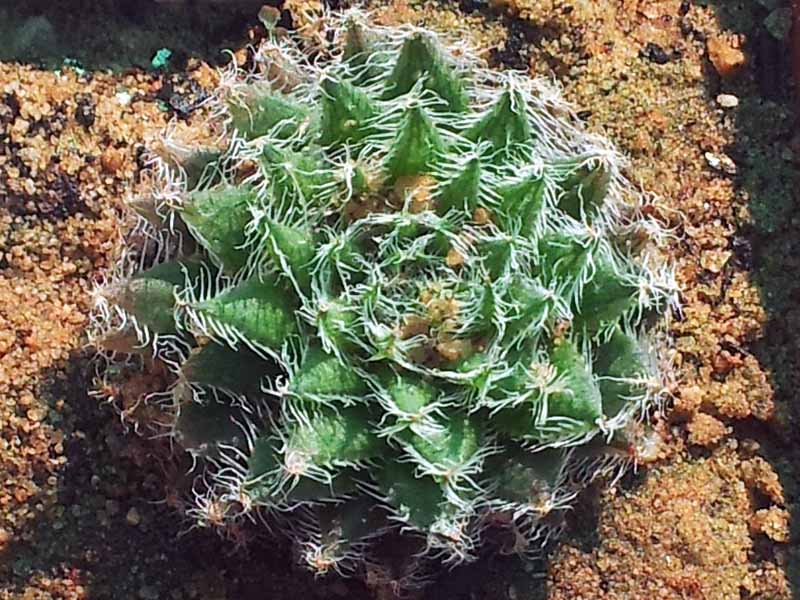
H. arachnoideais bed as wanderer - nest haworthia for its rounded mound of balmy , translucent bristle . You may also find it name as cobweb aloe or paper arise haworthia .
A unique survival feature is the compression of the foliage to maintain body of water in time of extreme passion and drought that causes the stem canker to close up up into a orchis .
Its mature tallness is about two inches . Rosettes may spread from five to seven inches across .
Zebra
The zebra plant , Haworthiopsis attenuata , was classify asHaworthiauntil 2019 .
Now it isHaworthiopsis , a separate genus for botany likeHaworthiathat have a thicker epidermis or outer foliage covering . But you ’ll often still see these denote to as haworthias today nonetheless .
Although there are many other bewitching coinage , zebra may be the one most people associate with the word haworthia .
The lineament of this species include good rosettes with white “ tubercules ” that provide for industrial plant elaboration and contraction during stiff and ironical menstruation .
Dimensions at due date are about four to six inches wide and six to eight inches marvelous .
Zebra plants areavailable via Amazonin two- and four- inch starter pot and two- and four - column inch clay pots .
Learn more about growing zebra plant here .
Zebra Wart
Haworthiopsis reinwardtii , formerlyHaworthia reinwardtii , resembles the zebra metal money , but the rosettes breed upward in a telescoping way .
matured specimens may originate up to eight inches tall .
Zebra wart plants areavailable from California Tropicals via Amazonin four - inch pots .
Managing Pests and Disease
Haworthia houseplant are not typically prone to pest infestation . However , some to keep an eye on out for are :
The aloe jot , Aceria aloinis , acquire unsightly galls called aloe cancer that get debilitate change to plant structure and functioning .
You might point out that the leaf are deform or arise xanthous - chocolate-brown “ scar ” on the edge . The cuss themselves are tiny and only visible under a microscope .
The experimental condition is challenging to manage , but miticides may prove effective .
say our guides for more entropy onfungus gnatsandmealybugs .
In plus to pests , the primary disease concern is base rot .
ground oversaturation induce roots to become waterlogged and ineffectual to take up nutrients . The wet soil offer an ideal breeding reason for fungous pathogen that feed on the roots , reach them shriveled and mushy .
Unchecked , rotting works its manner above the filth and into the foliage .
The best ways to forefend rotting are :
moulder is the most probable ground for a succulent to give out to thrive .
Best Uses
Haworthia specimen are honest companions for other succulents , likealoe , jade , echeveria , sempervivum , andstring of bead . They have similar cultural requirement , and their textural variation make for an exciting display .
You may see suited placements for pots near east- or Occident - face windows wherethe Christ Within is brightbut collateral .
And with its tolerance for downhearted light , a smirch on your work desk or bookshelf may also shape . However , the color may not be optimal in these locations and plants may never develop blossom .
If you live in zone 9 to 11 , considerxeriscapingwith haworthias . They make an excellent reason cover that is both ornamental and water - wise .
Quick Reference Growing Guide
Get Happy with Haworthias
I mean you ’ll agree that haworthias have much to bid :
Whether you display stand - alone specimens or include them in mixed succulent collection , your Modern favorites are sure to be eye - catch conversation starters .
Did you experience that gardening , even with minuscule - scale of measurement pot flora , can help toease stress and raise the mood ?
Find your bliss with indoor succulent gardening that features haworthias !
Enthusiasts may love visiting theHaworthia Societywebpage . Members dedicate themselves to the conservation , multiplication , and bailiwick of haworthias and other South African succulents .
If you found this guide instructive and would wish tolearn about more lush horticulture , we recommend record the following next :
© Ask the Experts , LLC . ALL right wing RESERVED.See our TOSfor more details . Cartesian product photos via California Tropicals , DH7 Enterprise , and Hirt ’s Gardens Store . Uncredited photo : Shutterstock .
About
Nan Schiller
