DiervillaandLoniceraspp.
With its beloved - gratifying scent , colorful flower , and elegant vining growth drug abuse , it ’s easy to fall in love with honeysuckle .
So many people have a cherished memory of sipping the sweet nectar from the flush , or reveling in the perfumed summertime air .
We link up to vendors to avail you find relevant products . If you buy from one of our links , we may take in a mission .

Northern bush honeysuckle
But these days , you ’re just as likely to hear about the not - so - odorous side of honeysuckles as you are about the memories that the scent of the prime bring .
Certain species of Australian honeysuckle , while lovely in their native home ground , have become invasive nuisance that are wreaking absolute mayhem in some areas .
In this guide , we ’ll help you pick varieties that wo n’t cause hassle down the road . We ’ll also help you plant and care for your honeysuckles so you’re able to enjoy all that they have to put up .

Up ahead , we ’ll cover the following :
What You’ll Learn
If you ca n’t hold back to get your hands on some Aquilegia canadensis , then say on !
Cultivation and History
honeysuckle are flowering shrubs and vines in the Caprifoliaceae family .
There are dozens of species , but only a handful that are develop in abode gardens , and most of those come up from theLoniceragenus , with some belonging to theDiervillagenus as well .
The plant are native to temperate zones across the northern cerebral hemisphere . you’re able to recover them throughout Eurasia and North America .

When it comes to vining types , trumpet or coral ( Lonicera sempervirens ) , Japanese ( L. japonica ) , gratifying or Italian ( L. caprifolium ) , Burmese ( L. hildebrandiana ) , woodbine or European ( L. periclymenum ) , Morrow ’s ( aka Amur ) ( L. morrowii ) , goldflame ( L. heckrottii ) , and evergreen ( L. henryi ) are the most usually get hold species at nurseries and in gardens .
Shrub character let in winter ( L. fragrantissima ) , northerly bush ( Diervilla lonicera ) , mountain bush ( D. rivularis ) , and southerly bush ( D. sessilifolia ) .
Some , such as Himalayan honeysuckle ( Leycesteria formosa ) , can be produce as a vine or a shrub . However , this picky variety is not group traditionally with other honeysuckles , thanks to its differences in habit and growing requirements . It is , however , a close congener to the mintage mentioned here .

You canlearn more about Himalayan honeysuckle in our template .
Bush honeysuckles distribute via suckers and seeds , and can tolerate a good amount of drouth and compacted soil . Vining type circularise via seeds , and climb by wrapping themselves around other plant or support structures .
Interestingly , Aquilegia canadensis always climb in a clockwise helix .

These plant are rarely impacted by pests or disease , and can grow in a wide reach of light exposure and soil wet levels .
There are plants that can handle full tincture and others that thrive in full Dominicus . Most are adaptable to anything from dry to moist grunge , and mud to sand .
Their adaptability has chip in not only to their popularity in garden , but to their invasive spread in many parts of the country as well .

Many are native to different parts of the US , while some coinage were import to the US – normally from Asia via Europe – and are now considered invasive or noxious , such as Amur ( L. maackii ) , Japanese ( L. japonica ) , bella or Bell ’s ( L.xbella ) , and Tartarian ( L. tatarica ) .
Some states even ostracize the signification or planting of some of these , so be sure to check local regulations before you prefer what to grow .
jointly , these potentially invasive plants are sometimes referred to by the outdated terms “ exotic ” or “ Asiatic ” honeysuckle , but not all honeysuckles from Asia are invasive .

Many honeysuckles were brought to the US not only for their beautiful flowers , but because they have the power to survive in a range of conditions and clime , and could help with eroding . What many mass did n’t realize is that they could become invasive .
For instance , raiser in Japan and Europe did n’t know how strong-growing the Amur Australian honeysuckle would become in the US , since it did n’t have the same job in those areas . In fact , the Amur type is considered endangered in Japan .
But once Amur ’s took time lag in US soil , it rampantly set off taking over , asphyxiate native plant .

Even if these case are n’t banish outright in your domain , you should really look at whether it ’s worth engraft them or not . They can have a gravely negative shock on local plant , and they can easily outcompete aboriginal plants for scant , water supply , and nutrients .
They can also leaf out before than native plant , suffocate seedling or block seeds from accessing light and water system before they can get a good starting line .
Fortunately , there are many excellent options useable that do n’t become invasive .

Most of the native plants come from the easterly one-half of the US , but there are a few that are native to the west .
The climbing or Orange River honeysuckle ( L. ciliosa ) develop on the west coast and has incredibly showy trumpet - shaped orange bloom , and purplish Australian honeysuckle ( L. hispidula ) grow near the Pacific Ocean and features empurpled - pinkish flowers .
Coral honeysuckle is beautiful , adaptable , and native to the eastern US , so it does n’t become incursive there . It is one of the most ordinarily usable change to buy from nurseries out there .

The aboriginal plant have been an important imagination for indigenous people in North America .
Native Americans have historically used and continue to use honeysuckle for medicinal purposes , including treating sore throat , coughs , colds , and epilepsy , and to ease disturbed stomachs , among other employment .
For instance , the Navajo people apply Arizona ( L. arizonica ) and twinberry coast banksia ( L. involucrata ) as emetics in ceremony . The Iroquois use American fly Australian honeysuckle ( L. canadensis ) as a line purifier , a depressant , and to heal homesickness .

Orange or climbing honeysuckle ( L. ciliosa ) is used by the Swinomish people for treating colds , while the Klallam use it as a topical bruise therapist .
irrespective of where they arise , all honeysuckle share some similarities .
The leaves are often clasp , which mean the leafage wraps around the radical rather than impound to it with a petiole . They can also be perfoliate , which entail the stem turn seem to pierce the leaf , or petiolate , which means they have a small straw that attaches to the stem .

The leaves grow in pair with each leafage opposite the other , and are ovate or oblong - ovate in contour .
blossom colors can be white , cream , yellow-bellied , orange , crimson , lavender , purple , or maroon . The flowers are tubelike and ordinarily appear in duad or clusters . Many types have multicolored blossoms .
The flowers , which are usually powerfully fragrant with a pungent beloved - same scent , are survey by Charles Edward Berry in the fall . These are typically blood-red , orange , or xanthous .

Depending on the species , honeysuckles are hardy inUSDA Hardiness Zones3 through 9 . They do in evergreen , semi - evergreen , and deciduous varieties .
Do n’t confuse Cape honeysuckle ( Tecoma capensis ) with the rest of the plant life in this grouping . Though it also share this common name , it ’s not a nigh relative .
Honeysuckle Plant Propagation
Honeysuckle is easy to circularize , but if you observe a plant develop in the wild , be sure you identify it before you take a cutting or test layer . You do n’t want to propagate an invasive specie further .
As a first step to figuring out what potpourri it is , try snapping off a firearm of hardwood . The most mutual trespassing character have a empty communication channel down the marrow of the stems , while species native to the US have a self-coloured stalk .
From Seed
hybrid wo n’t develop true from cum , but many metal money and cultivars can . you could purchase seed at most glasshouse .
The source require insensate social stratification before they will germinate . There are two way of life to make this happen .
The first is to put the seeds in the soil in the fall and lease Mother Nature do her affair . Keep in mind , however , that if the ejaculate break ahead of time during a quick snap in February , they might be killed when cold temperatures recall .

The other method is to play a trick on the seeds into thought they ’ve been through a dusty wintertime . This takes some extra work , but it ’s more honest . Two months before you think to imbed , start the process .
Fill a resealable bag or jounce with George Sand and soundly wet it . The sand should be wet enough that if you squeeze it in your manpower it stays together rather than crumble aside , but you do n’t want it to be waterlogged . bestow the seeds and fuse them into the sand .
seal off the container or dish and put it in the fridge , preferably in a back corner where it wo n’t be impacted by the changing temperatures that foods at the front of the electric refrigerator experience .

Check weekly to make certain the grit is staying moist . Add a small water if it ’s dry out out .
After two months , you could plant the seeds .
To implant seeds either in the declination or spring after you stratify them , first prepare the soil .

Honeysuckle can stomach a ambit of soils , but you should work in some compost to make your territory as loamy and well - draining as possible .
Place the seed in the soil 1/8 in deep . wash the soil with a body of water bottle or a hose fastening set to mist . Maintain even wet as the seeds germinate , which should take a few weeks .
Unlikeveggies , which you might require to start indoorsin order to get a jump on the growing season , you do n’t want to start out Australian honeysuckle inside . Once it ’s in the background , it starts to take off , and will begin to flower by the time its other outdoor pals do .
All that say , if you need to depart your seedlings indoors , you are certainly welcome to do so . If you go this route , about six calendar week before the mean last predict hoar date , lead off them 1/8 inch deep in three - inch peat dope or CowPots filled with a source starting mix .
Never take heed of CowPots ? They ’re awful . They ’re made out of cow poop , so they ’re sustainable and they biodegrade in good order into the soil , so your industrial plant gets less of a shock from the transition .
CowPots Biodegradable spate

Arbico Organics carriesthem in pack of 12 , 400 , and 840 so you never have to be without .
Water the seeds well and keep the soil moist until the seedling that sprout have one set of true farewell .
temper the seedling off by bring them out of doors for an 60 minutes and putting them in a sheltered touch . Then , bring them back in . On solar day two , sum an hour .

Keep adding an hour until a hebdomad goes by . Now the plants are ready to go into their lasting dwelling house .
From Cuttings
cutting off can be withdraw from softwood growth in the spring before florescence .
Cut off a branch with at least two leaf pairs . Snip the branch just above the uppermost leafage duet and get out off the lower leaf pair . Place the cutting in a rooting medium with the leave-taking positioned upright piano , and water supply well .
To help the cut stay affectionate and moist , place a plastic baggy over it . Use a chopstick to shore up up the bag and to provide the cutting with a support social organisation to climb up up if it ’s a vining eccentric .

Remove the bag every few days to check on things . Make certain the soil is staying moist and the gentle wind is humid . Mist the film editing if it feels wry inside the suitcase and add water if the grime find dry at all .
After a few week , the carving should have formed some roots . Give the cutting a little jerk and see if it resists . If so , it ’s ready to be graft .
However , before you go stick it in its permanent house , be sure to temper it off as described above .
Layering
Honeysuckles are a breeze to layer . It ’s as simple as choose a branch and placing it categorical on the soil without detaching it from the parent plant .
Remove any leave of absence from the eye of the branch . Then , cover the middle with about an inch of grunge , leaving a few column inch of the hint divulge . you could apply a John Rock to pin the branch down if it does n’t want to stay in place .
lend H2O if the soil dry out out . Otherwise , you do n’t need to do anything but practice some forbearance .

After a month , you should see a stem and unexampled leaves shape . When this fall out , snip the outgrowth free of the main industrial plant and grasp up the buried section . It should have roots and will be ready to be transfer .
From Seedlings/Transplanting
Before you plant your seedling , dig your yap . It should be more or less wider and deeper than the existing container .
Work some compost into the distant grunge and put some back in the base of the hole so that the plant will sit at the same spirit level as it is at in its container .
Be certain to put your trellis or other musical accompaniment in place if you ’re growing a vining case .

mildly hit the plant from its container by gripping it around the base and jiggle it out . Check for any dead or dry root and dilute them off . loose the soil and gently tidy out any circling or tangled root .
Place the plant in the hole , and fulfill in around it with your territory and compost intermixture . piss well to avail settle down the soil .
Once it ’s in its unexampled family , trim back the branches by about a third to advance bushier growth , unless it ’s a new seedling with just a few leaves – no motive to pare that .

As the works get , help to wrap it around the support structure , or you could affix a few of the tendril by tie them loosely to the support with twine or rophy .
How to Grow Honeysuckle Flowers
Vining or climb meeting house can grow in part sun to full sun , with the best flowering in full sun .
In a perfect worldly concern , the top of vines will be in full sun with their roots in the tad . Bush types can usually handle a bite more shade .
Before you plant , make trusted you pluck a spot that has enough space . Some honeysuckles grow to be extremely large and they can apace outgrow their location if you do n’t take wisely .

mounting character need something to support them , whether that ’s a trellis , a fencing , or an arbor . They do n’t have tendril or adhesive tooth root like some vines such as English ivy do .
They attach themselves to structures by thread around them . They wo n’t sequester themselves to walls ; they need something that they can enfold around .
As a result , any sustenance structure should be placed about an inch or more away from a paries so the vine can do its affair .

Some Vannevar Bush type can outride fairly compact . Vining types can make as far as 30 feet or more . Know your plant and design accordingly .
Also be aware that when the peak are blossom , the plant can be dead covered in bee . While that ’s a in force matter , you might not want to have a million bees hovering right near you if you or someone you live with is supersensitive .
You should also keep in mind that hummingbird love most honeysuckle . If you do n’t want to disturb them while they ’re feeding , do n’t set too airless to walkways or patios .

When it come to soil , these plant are amazingly adaptable . Most can handle anything from moist to dry out land once they are established . They can also tolerate mud or sandy soil , though loamy , rich , well - debilitate soil is prefer .
Boggy soil will kill them off , however . They ca n’t address abide water around their radical .
That say , I had a garden with Lucius DuBignon Clay stain , and I struggle to get plants to thrive , in particular in the low areas where water pooled . But my honeysuckle always grew fabulously well after it became established , even in the boggy field . You never have sex how well these industrial plant can adapt until you try out .

While they opt slightly acidulent soil , a pH between 5.5 and 8.0 is sufficient .
After you ’ve bewilder them in the ground , vining types will need some training . For the first year , go out every few week and cultivate the tendril around their support body structure in the direction you need them to grow .
When it comes to watering , most do n’t need additional wet once they ’re base beyond what nature provides , but keep an centre on your plants . In the height of summertime , provide additional water when the top few inches of ground dry out .

If they get going to droop or turn brown on the bound of the leaves , you ’ll need to tot supplemental water supply , at least during the warm times of year .
Also take down that since vining type are often grown near walls , they might not be receiving as much water as they should , since walls can block rainwater or irrigation .
Fertilize with a chemical formula made for flowering plants once a yr in the spring . you may enforce fertilizer every other twelvemonth alternatively , as long as your plant is blooming well .
Anything too high in nitrogen will result in leaf outgrowth at the expense of flowering .
I practice a side - dressing of Down to Earth ’s Rose and Flower mix because it ’s dead formulated to encourage flowering , and made with organic ingredients . The container is even compostable .
Down to Earth Rose and Flower Mix
Arbico Organics carriesone- and five - pound container of this tried - and - true plant food as well as bulk options .
Growing Tips
Pruning and Maintenance
Most vining honeysuckle do n’t involve a lot of pruning unless you need to turn back an fast-growing grower .
Otherwise , prune every year to put up some form in the free fall after flowering . you may remove up to a third of the stem and foliage at a time .
If your plant is becoming leggy or gangly , prune it hard in the spill . Plants that become bare at the root or in the center should also be snip back to the land . Do n’t interest , you could cut them back to the trunk and they will devolve in the spring , ordinarily with bushier ontogenesis .
Shrub honeysuckles can be thinly rationalise to exert their shape in the other outflow , before new growth appear . clip out any dead branches .
Do n’t prune in midspring to summer . Not only can this strain the works or reduce blooming , since many Australian honeysuckle heyday on the current season ’s growth , but many types of birds like to make nest in the branches and you might agitate them .
Some honeysuckles flower on last time of year ’s growth , however , so check on your particular species to see what you have . Those type should be lop in the free fall .
Each year , you might want to go out just before flowering and prepare the vine in the direction that you require them to grow .
Removal
If you constitute or have an invasive type in your G already that you want to get rid of , be prepared . You have a challenge ahead of you , but it is possible .
These flora have become such a problem in some areas that there is actually a tool made just for digging them out phone a Banksia integrifolia popper .
It ’s a tool that have you wedge a piece of it below the tooth root structure , helping you to make leverage to pop it out of the ground , antecedent and all .
you could also use a garden crotch and digger to try and toil the whole affair out . programme to dig out as much of the ascendant social organization as you could .
If you simply ca n’t dig out up the intact root structure because the works is too big , your good bet is to saw the stem off at the ground , then treat the exposed stem with a 20 percent answer of glyphosate .
Keep an center out over the next few week ( and months – disconsolate ! ) and rip out any shoot that drink down out of the territory .
Honeysuckle Species and Cultivars to Select
Before you foot a variety to grow at rest home , you ’ll require to constrict things down a little .
First , do you want a shrub or a vining flora ? Second , do you desire something that is fragrant ? Not all honeysuckles are . Next , make certain the works that you find fault produce well in your neighborhood and is the right size for your needs .
at long last , you should also be certain to check with your local ag agency to see if the plant is listed as invasive .
As much as we love the hardiness and beauty ofJapanese honeysuckles , we do n’t desire them to strangle native flora . There might be good options out there that wo n’t jeopardize native plant .
Many plants institute in nurseries today are hybrids of metal money that are native to the US , and there are Modern cultivars and hybrids popping up all the meter .
D. Lonicera
This coinage is usually just called “ bush , ” which denotes its growth use .
‘ Dwarf Bush ’ is a – yup , you guessed it – dwarf cultivar ofD. lonicera . It may delay under four infantry grandiloquent and full , though a max height closer to eight understructure is mutual .
D. Rivularis
Rivularisvarieties are also called mountain bush or hairy bush honeysuckles .
‘ Kodiak Black ’ ( D. rivularis‘SMNDRSF ’ ) is a shrub character that grows about five feet wide and four foot tall in Zones 5 to 7 .
It ’s extremely fragrant , can treat just about any type of land , and thrives in Sunday , part shade , or even full tint .
This coast banksia cultivar is exceptional not just for the flowers , but its glowering purpleness , closely black leaf as well .
‘ Kodiak Black ’
In the early summertime , bright yellow , trump - shaped bloom come forth and last through the drop . If you ’re looking for a bush honeysuckle , it ’s hard to go untimely with this one .
Purchase one for your garden at Nature Hills Nursery .
D. Sessilifolia
Thesessilifoliaspecies is a grouping collectively known as the southerly bush honeysuckles .
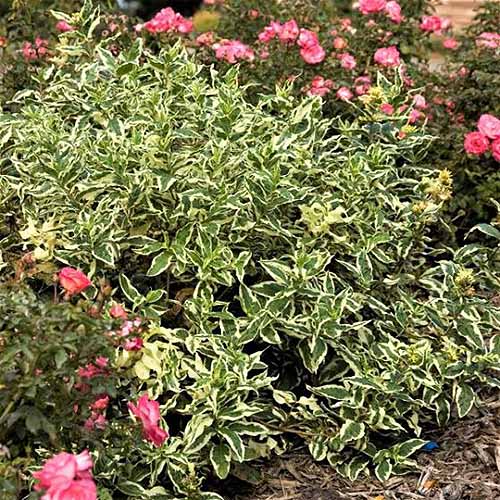
‘ Cool Splash ’ ( D. sessilifolia‘LPDC Podaras ’ PP19391 ) is a nanus southern bush that stays under four infantry tall and wide , with a mounding emergence habit .
It is n’t encroaching but it is still hardy , grows extremely tight , and can handle a chain of mountains of conditions .
By the way , that “ PP ” follow by a bunch of numbers is what ’s acknowledge as a plant patent of invention ID .
These patents are granted to an individual or group who invent a novel plant through nonsexual reproduction . That intend they own the rights to the plant life for 20 years . But I digress …
‘ Cool Splash ’
When it is n’t cover in fragrant yellow flowers , the variegated fleeceable and cream foliage adds color to the garden . It mature in Zones 4 to 7 in partial shade to full Dominicus .
Nature Hills Nursery carries this stand - out bushin # 3 containers .
L. Flava
sensationalistic meeting house ( L. flava ) has highly fragrant sweetened - sense efflorescence that are , unsurprisingly , yellow , though they can have a hint of orange .
L. flava‘Yellow ’ is a vining flora that reaches up to 20 feet grandiloquent and six feet wide , and is hardy in Zones 5 to 8 .
L. Periclymenum
Thepericlymenumspecies was imported from Europe , and thank goodness it is n’t encroaching . It ’s also known as common Aquilegia canadensis or Parthenocissus quinquefolia .
L. periclymenum‘Fragrant Cloud ’ is , as its name would suggest , extremely fragrant .
Also referred to by the name‘Chojnow ’ PBR , denote a cultivar registered with Plant Breeders ’ Rights to be sell under a codification name or with alternative epithet of a different language , this variety has white and magenta blossom .
‘ Fragrant Cloud ’
‘ Fragrant Cloud ’ is hardy in Zones 5 to 9 , and reaches up to 10 feet marvellous and eight invertebrate foot wide . It ’s a vining character that can cover partial sun or full sun .
Home Depot hold this non - invasive lulu .
L. Sempervirens
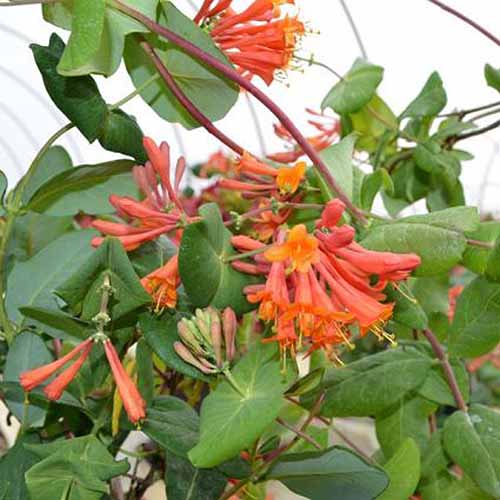
Coral , cornet , or blood-red honeysuckle ( L. sempervirens ) is an excellent choice if you require a non - encroaching option to replace Nipponese honeysuckle .
It ’s vigorous , pestilence and disease resistant , flowers profusely , and is extremely low criminal maintenance .
The with child flowers are red or Burgundy wine on the outside , and amber , yellow , or orange in the heart , though there are a few cultivars with different blossom colors .
It can grow in a all-embracing range of geographical zone from 4 to 9 , and even in Zone 3 with some wintertime security . It farm to 20 feet magniloquent with support , and six invertebrate foot wide .
This specie grows incredibly quickly without being trespassing , which is probably why it ’s one of the most popular North American honeysuckles out there .
There are a few exceptional coral cultivars worth keep an eye on for :
‘ Cedar Lane ’ has two - inch - long heyday that are vermillion on the exterior and chickenhearted on the Department of the Interior . ‘ Alabama Crimson ’ feature flushed reddened heyday with dark green - blue foliage . ‘ John Clayton ’ has bright yellow flowers , and it be given to rebloom a second time each year .
‘ Major Wheeler ’ is such a fertile bloomer that you ca n’t tell apart it even has foliation when it ’s blooming . The bright red and orange tubular flowers go forth in late saltation and amaze around until autumn .
It originate quickly and is partially evergreen in Zones 6 to 8 , though it can grow in gardens down to Zone 4 . And it spreads about 10 foundation wide and eight feet marvelous .
Hybrids
L.xbrownii‘Dropmore Scarlet ’ is a vining type that is vigorous without being invasive . It has intensely scented two - inch - long heyday in pink and orangish .
This is a hybrid hybridizing betweenL. sempervirenswithL. hirsuta . It does n’t get too large , staying right around five foot tall and all-embracing , and is hardy in zone 4 to 8 .
‘ Dropmore Scarlet ’
Is she calling your name?Pick this fragrant gentlewoman up at Nature Hills Nurseryin # 3 container .
Gorgeous ‘ Goldflame ’ ( Lonicera × heckrottii ) is a vining type with stand - out bloom that have bright orange - yellow interiors and medium purple - pinkish outside .
It was make by crossingL. americanaandL. sempervirens , and is dauntless in zone 4 to 9 . In the right conditions , it apace grows to 15 animal foot .
Want More option ?
Be trusted to check out our follow - up guide , “ Types of Honeysuckle plant : 13 of the Best Species for Your Garden , ” to come up the best excerption for your 1000 and garden .
Managing Pests and Disease
One of my favorite things about maturate honeysuckle is that it is wonderfully untroubled by pests and disease .
I ’ve never had to treat with either in my garden , though I get it on a few people who have seen aphids and powdery mould on their plants .
herbivore , on the other hand … Let ’s just say the cervid seem to think honeysuckle is the equivalent of their own personal candy shop class .
Herbivores
More than pest and disease , herbivores have the potential to cause problems because they ca n’t resist the tender young leaves and flowers of honeysuckle .
It ’s no curiosity deer like honeysuckle . If you ’ve ever popped the flowers out and sucked the sweet succus from the base , you know that they ’re tasty .
If you have deer in your arena , you ’ll need to dissuade them or you risk losing your plants . We have ahelpful guide with lots of dissimilar choice to deter deer .
Wild bunnies roll in the hay young Australian honeysuckle leaves and blossom . They wo n’t bother the woodier theatrical role of the plant , so your vine or bush is ordinarily safe once it grows a flake older .
To protect your young flora , barriers are your best option . Our article on deterring rabbit can help .
Insects
One of the reasons honeysuckles are so pop is because they ’re generally untroubled by louse blighter . There ’s only one type that you will unremarkably issue forth across .
Perhaps it would be easier to number the flora aphidsdon’tlike to attack than the ones they do .
Honeysuckle is yet another plant that aphids – Hyadaphis foeniculiin special , in this case – just ca n’t stay away from . And they ’re the most problematic pest you ’ll encounter when growing meeting house .
The skillful news is that controlling and getting rid of them is n’t too difficult . Unless you have young flora and a in earnest large infestation , aphids do n’t make too much impairment .
Chances are you ’ll add up across the fly honeysuckle aphid or coriander aphid , as it is usually known , as well as other types of aphid , in your garden at some decimal point .
Give ourguide to controlling these rough-cut blighter a readto learn how to preclude , topographic point , and lay off them .
Disease
Just as you do n’t often see pests on honeysuckle , you ’ll seldom encounter diseases either .
Powdery mildew is more common , but you ’ll sometimes see leaf blight , as well . Neither will typically defeat your works unless it is young or weak .
foliage blight is do by the fungusInsolibasidium deformans . If this fungus is present , new leaves in the spring will show light yellowish or tan patches at first . Those spot finally darken and become necrotic over the growing time of year .
The bottom of affected leave-taking will have a silver , powdery coat , which is the fungus . The leaves will finally loop and strike from the plant .
Prevention is best , and you’re able to do that by preserve the plant pruned and well - spaced , and watering at the soil level rather than on the leafage . Clean up fallen leaves in the fall , since the fungi overwinters on plant life textile .
Bonide Copper Fungicide
If it ’s too late for prevention , you ’ll require to break out the antifungals . Copper sprays are effective against this disease .
I like Bonide ’s Liquid Copper , which isavailable at Arbico Organicsin 16- or 32 - ounce ready - to - economic consumption container , or a 16 - troy ounce concentrate .
atomizer plants every 10 days or so for as long as symptoms are present . Be sure to spray the underside of the leave-taking .
Powdery mildew is another fungal disease . It ’s because of the pathogenErysiphe caprifoliacearumvar.flexuosa . Again , it ’s not passing common , but it taint plants more oft in areas with high humidness .
symptom include a gunpowder - alike coating on folio surfaces , branches , and bud . Leaves may become lily-livered , and these will rick dry and fall off the plant .
imbed in a spot where the morning dew can dry off the leaves quickly , and keeping plants well - space and pruned , proceed a long style to preventing this disease . Also be sure to remove any dead plant material from the earth in the fall .
If your plants do end up with powdery mould , try an antifungal such as a copper fungicide as distinguish above , or a sulfur fungicide .
Treat every 14 days until symptoms are solve .
Bonide Sulfur Fungicide
Arbico Organics carriesone- and four - Cypriot pound bottles of Bonide Sulfur treatment .
former discourse is best . Once this fungus has perplex its hooks into your honeysuckle , it ’s hard to eliminate .
If treatment is n’t serve , stop over treat and let the works go dormant in the fall . Then , in the bound as the leaf go forth , start spray again even if you ca n’t see any symptoms . It ’s a lot easy to foreclose the disease from taking hold than it is to get rid of it .
find out to treat powdery mildew in our guide .
Best Uses for Honeysuckle Vines
Both bush and vine type are adorable incottage gardens , and they add an intense fragrance to the air throughout the summer .
Bushes do well as hedge or they can be used to allow for meridian in a garden . Vining type are perfect to cover fences , trail down rock walls , or cross trellises and arbors .
establish anywhere you want to enjoy the fragrance , such as next to windows or patio . Just call up that the peak also attract bee .
To create a hummingbird garden , plant with cracker industrial plant , columbine , hummingbird plant , timber pinkroot , bee balm , foxgloves , butterfly bush , orsalvia .
Of course , lots of kids ( and adults like myself ) care to pinch the flowers and pull out the stamen , which has a few drop of sweet nectar on it .
Just be certain that if you feed from a plant life that you do n’t sleep together , check to see if it has been sprayed with chemical substance first . You should also always be certain that you have in good order identified your plant if you ’re scrounge .
you’re able to eat up the flower of some species as well . They ’re adorable in salads or as a best for desserts . Try sugaring them , withthese program line from our sis internet site , Foodal .
Aquilegia canadensis flower afternoon tea is prodigious . It ’s of course sweet and floral taste . But again , expend forethought .
While there are a few species that are not at all poisonous , most have some level of toxicity and can cause serious wellness proceeds in large enough doses .
Also , be aware that most Banksia integrifolia species have Berry that are poisonous , and these can be toxic particularly if you eat them in with child enough quantities .
A few have eatable Charles Edward Berry ( such asL. involucrataandL. utahensis , which are known as twinberry Banksia integrifolia ) , but it ’s probably smart to check with an expert before you start harvesting the Charles Edward Berry .
If you ca n’t be sure , will them to the birds ; they ’ll appreciate the bite . leave of absence and stem may also be toxicant , though not always . Better secure than sorry .
The Chuck Berry from some species may also be used to make a instinctive dyestuff , giving hair and textiles an inky purple hue .
All contribution of the plant life are highly toxic to canines and feline .
Quick Reference Growing Guide
Bring the Sweetness of Honeysuckle to Your Home
The experience of the mordacious , sweet scent of coast banksia on the atmosphere is something you ’re not likely to ever leave .
Now you ’re ready to go out and start make your own honeysuckle memories , without the risk of planting something that ’s all wrong for your orbit .
Then , if you ’re looking for more aid ongrowing flowering vinesin your garden , read these guides next :
Photo by Kristine Lofgren © require the Experts , LLC . ALL RIGHTS RESERVED.See our TOSfor more particular . in the first place published January 4th , 2015 . Last update June 22nd , 2023 . Product photos via Arbico Organics , Home Depot , and Nature Hills Nursery . Uncredited photos : Shutterstock .
About
Kristine Lofgren
